Dated, falsifiable re-entry predictions with a public, hash-chained track record. Every call is graded against Space-Track ground truth, and every miss stays in the ledger forever. The ledger is legible — not the orbits.
Rendered live from the published track-record.json — the same artifact the product reads. Each row opens the full story of that prediction: the claim, what its status means, the ground truth and the receipt.
| Issued | Object | Claimed window | Outcome | Lead | Entry hash |
|---|---|---|---|---|---|
| Loading ledger… | |||||
We publish the method and the full graded record. We keep the tuning. The description is open; the thresholds are the product.
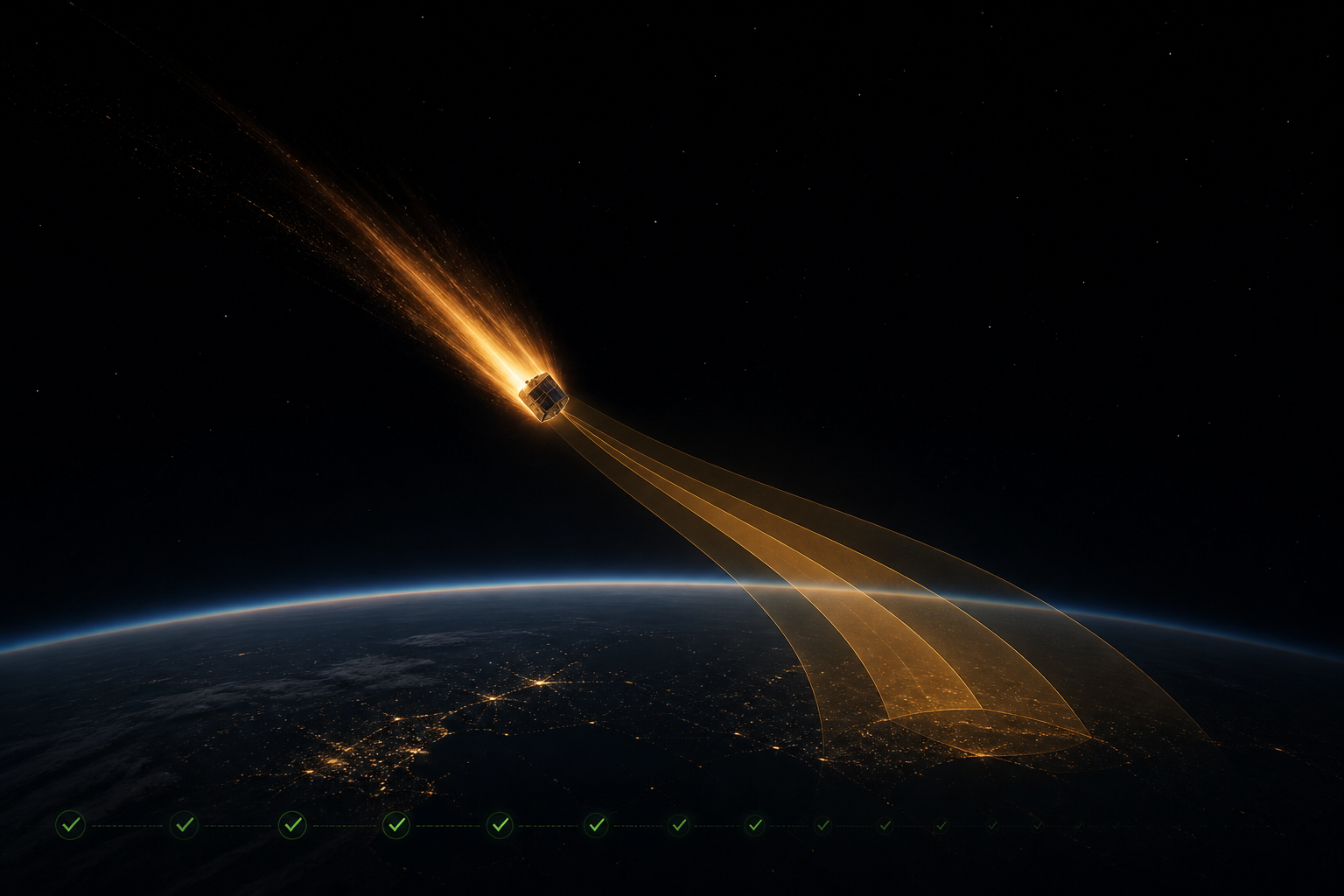
Objects stop being tracked before they stop existing. We detect the silence pattern — the tell that an object has entered terminal decay — and issue a dated prediction the same day.
P10 / P50 / P90 day windows, conformal-calibrated, graded against Space-Track ground truth. When we're wrong, the miss stays in the ledger forever.
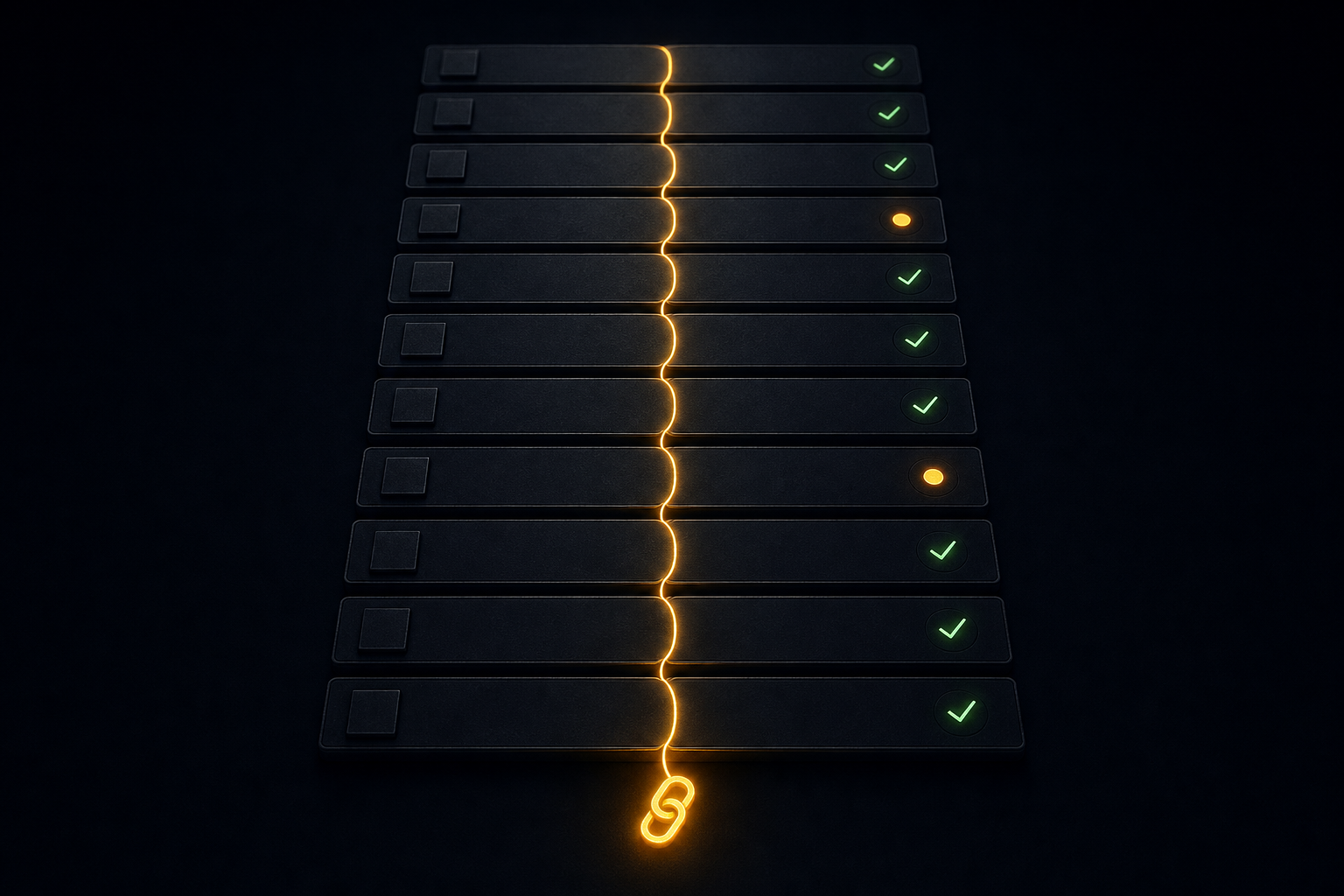
Every prediction is hash-chained the day it's issued. We can't edit history — and neither can you. A ten-line script verifies the whole chain.
Rising F10.7 compresses every re-entry clock at once. The stress test re-ranks the watchlist with per-object drag response and shows which objects flip from weeks-remaining to days-remaining — before the storm does.
The track record is public and always will be. You're paying for what's next, not for proof of what happened.
Same account as DebrisGuard · one API key works on both products · cancel any time.
Every prediction is a dated claim with an explicit window. It is graded against Space-Track Historical decay messages — the after-the-fact record of what actually re-entered — never against anyone's forecasts. The grading rules are published in full on the methods page.
They stay in the ledger forever. Entries are hash-chained the day they're issued, so a miss can't be quietly removed or reworded — the chain head would change and anyone holding yesterday's receipts file would see it.
We run a burn-cadence stream internally, but we don't publish claims until a stream sustains better than 60% precision over 30 days of public-grade evaluation. It hasn't cleared that bar yet, so it isn't for sale. We think that policy is the product.
Public catalog data — Space-Track general-perturbations histories and decay messages. Artifacts are recomputed and validated nightly; a failing artifact is never published and yesterday's stays live.
DebrisGuard is our space-domain-awareness product: the map, conjunctions, live anomaly alerts. DecayGuard is the ledger: dated re-entry calls, graded in public. Same lab, same pipeline, same account — two lenses.